
Diwali
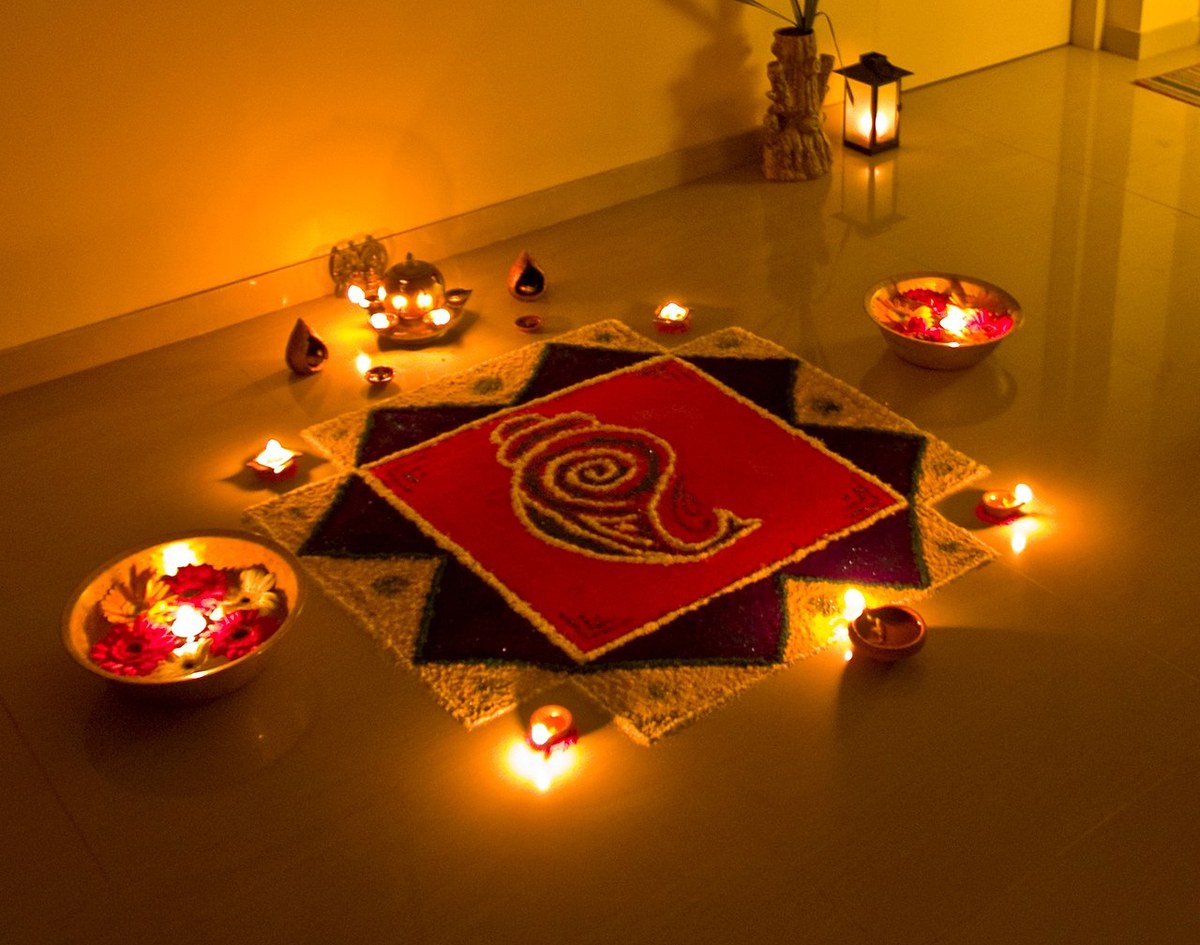
Dipavali (IAST: Dīpāvalī), commonly known as Diwali (), is the Hindu festival of lights, with variations celebrated in other Indian religions such as Jainism and Sikhism. It symbolises the spiritual victory of Dharma over Adharma, light over darkness, good over evil, and knowledge over ignorance. Diwali is celebrated during the Hindu lunisolar months of Ashvin (according to the amanta tradition) and Kārtika – between around mid-October and mid-November. The celebrations generally last five or six days. Diwali is connected to various religious events, deities and personalities, such as being the day Rama returned to his kingdom in Ayodhya with his wife Sita and his brother Lakshmana after defeating the demon king Ravana. It is also widely associated with Lakshmi, the goddess of prosperity, and Ganesha, the god of wisdom and the remover of obstacles. Other regional traditions connect the holiday to Vishnu, Krishna, Durga, Shiva, Kali, Hanuman, Kubera, Yama, Yami, Dhanvantari, or Vishvakarman. Primarily a Hindu festival, variations of Diwali are also celebrated by adherents of other faiths. The Jains observe their own Diwali which marks the final liberation of Mahavira. The Sikhs celebrate Bandi Chhor Divas to mark the release of Guru Hargobind from a Mughal prison.
Origins
Diwali comes from Dipavali (Sanskrit: दीपावली, romanized: Dīpāvalī), meaning 'a row or series of lights'. The term is a compound of the Sanskrit words दीप, dīpa, 'lamp, light, lantern, candle, that which glows, shines, illuminates or knowledge' and आवलि, āvali, 'a row, range, continuous line, series'.
How It's Celebrated
In the lead-up to Diwali, celebrants prepare by cleaning, renovating, and decorating their homes and workplaces with diyas (oil lamps) and rangolis (colourful art circle patterns). During Diwali, people wear their finest clothes, illuminate the interior and exterior of their homes with saaki (earthen lamp), diyas and rangoli, perform worship ceremonies of Lakshmi, the goddess of prosperity and wealth, light fireworks, and partake in family feasts, where mithai (sweets) and gifts are shared. The height of Diwali is celebrated on the third day coinciding with the darkest night of Ashvin or Kartika. The common celebratory practices are known as the festival of light, however there are minor differences from state to state in India. Diwali is usually celebrated twenty days after the Vijayadashami festival, with Dhanteras, or the regional equivalent, marking the first day of the festival when celebrants prepare by cleaning their homes and making decorations on the floor, such as rangolis. Some regions of India start Diwali festivities the day before Dhanteras with Govatsa Dwadashi. The second day is Naraka Chaturdashi. The third day is the day of Lakshmi Puja and the darkest night of the traditional month. In some parts of India, the day after Lakshmi Puja is marked with the Govardhan Puja and Balipratipada (Padwa). Some Hindu communities mark the last day as Bhai Dooj or the regional equivalent, which is dedicated to the bond between sister and brother, while other Hindu and Sikh craftsmen communities mark this day as Vishvakarma Puja and observe it by performing maintenance in their work spaces and offering prayers. Rituals and preparations for Diwali begin days or weeks in advance, typically after the festival of Dusshera that precedes Diwali by about 20 days. The festival formally begins two days before the night of Diwali and ends two days thereafter. Each day has the following rituals and significance: Diwali has become more popular in other countries. In New York City lawmakers have passed legislation to make holidays in school. But debates over the holiday push back. In the future Diwali will be a holiday. === Dhanteras and Yama Deepam (Day 1) === Dhanteras, also known as Dhanatrayodashi, is derived from Dhan meaning wealth and teras meaning thirteenth, marks the thirteenth day of the dark fortnight of Ashwin or Kartik and the beginning of Diwali in most parts of India. On this day, many Hindus clean their homes and business premises. They install diyas, small earthen oil-filled lamps that they light up for the next five days, near Lakshmi and Ganesha iconography. Women and children decorate doorways within homes and offices with rangolis, colourful designs made from rice flour, flower petals, coloured rice or coloured sand, while the boys and men decorate the roofs and walls of family homes, markets, and temples and string up lights and lanterns. The day also marks a major shopping day for buying new utensils, home equipment, gold jewellery, firecrackers, and other items. On the evening of Dhanteras, families offer prayers (puja) to Lakshmi and Ganesha, and lay offerings of puffed rice, candy toys, rice cakes and batashas (hollow sugar cakes). According to Tracy Pintchman, Dhanteras is a symbol of annual renewal, cleansing and an auspicious beginning for the next year. The term Dhan for this day also alludes to the Ayurvedic icon Dhanvantari, the god of health and healing, who is believed to have emerged from the "churning of cosmic ocean" on the same day as Lakshmi. Some communities, particularly those active in Ayurvedic and health-related professions, pray or perform havan rituals to Dhanvantari on Dhanteras. On Yama Deepam (also known as Yama Dipadana or Jam ke Diya), Hindus light a diya, ideally made of wheat flour and filled with sesame oil, which faces south in the back of their homes. This is believed to please Yama, the god of death, and to ward off untimely death.
Text adapted from Wikipedia, available under the CC BY-SA 4.0 licence.