
Ratha Saptami
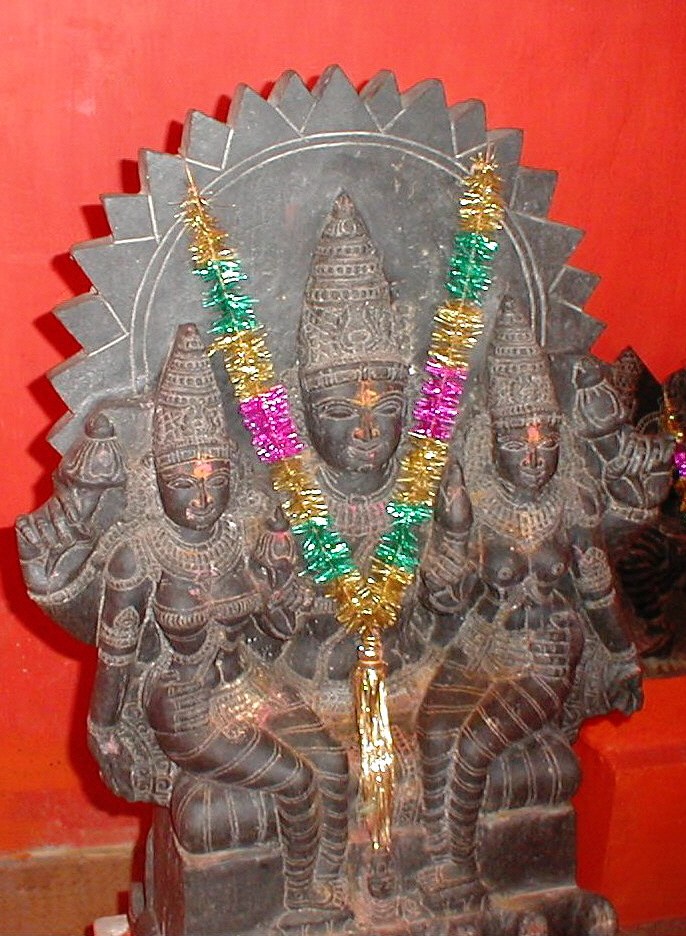
Ratha Saptami (Sanskrit: रथसप्तमी, romanized: Rathasaptamī), also rendered Magha Saptami, is a Hindu festival that falls on the seventh day (saptami) in the bright half (Shukla Paksha) of the Hindu month Magha. It is symbolically represented in the form of the sun-god Surya turning his ratha (chariot) drawn by seven horses (representing the seven colours) towards the northern hemisphere, in a north-easternly direction. It also marks the birth of Surya and is hence also celebrated as Surya Jayanti (the sun-god’s birthday). In recognition of its cultural and spiritual importance, the Government of Andhra Pradesh officially declared Ratha Saptami a state festival in December 2024, to be celebrated for three days, particularly at the prominent Sri Suryanarayana Swamy temple in Arasavalli, Srikakulam district. Ratha Saptami is symbolic of the change of season to spring and the start of the harvesting season. For most Indian farmers, it is an auspicious beginning of the New Year. The festival is observed by all Hindus in their houses and in innumerable temples dedicated to Surya, across India.
How It's Celebrated
Vishnu, in his form as Surya, is usually worshipped on this day. Usually, Rathasapthami begins in households with a purification bath (bathing is also done in a river or sea) by holding several Ekka (Calotropis Gigantea) leaves on their head while bathing and chanting a verse which is supposed to invoke the benevolence of the deity in all that one indulges in during the rest of the year. Argyam or (Tharpanam) (water held in the palms) is offered to the sun god on this day while chanting hymns are performed to the sun god. It also involves doing a puja with the ritual Naivedhya (food offering to God), and offering of flowers and fruits. Important prayers offered to the Sun god on this occasion are the Adityahridayam, Gayathri, Suryashtakam, Surya Sahasram namam. The preferred time for the pooja is within one hour after sunrise. In places like Mysore and Melkote, ceremonial processions carry the Surya Mandala - the icon of Surya. Arka (in Sanskrit, meaning a ray or flash of lightning) leaves, also called Aak in Hindi, Ekka (in Kannada), Jilledu in Telugu, Erukkam in Tamil and Calotropis Gigantea (bowstring hemp) in English. Arka is also a synonym for Surya or Sun. Its significance to sun god could be compared to the significance of tulasi (Ocimum tenuiflorum) leaves to Vishnu. Arka leaves are also used for worship of god Ganesha known by the name Arka Ganesha and also for Hanuman worship. Its stems, called samidha (sacrificial offerings of wood) are used for the yajna ritual as a sacrificial offering to a ritual fire. Its shape is said to represent the shoulders and chariot of sun god. Its use during the ritualistic ceremonious bath involves placement of seven leaves - one on the head, two on the shoulders, two on the knees and two on the feet. On this day, in South India, Kolam is drawn with coloured rice powder depicting a chariot and seven horses as symbolic of the Ratha Saptami. Cowdung cake is also burnt at the centre of this depiction and milk boiled on the fire is offered to the sun god. In some of the important Vaishnavite temples such as the Tirumala, Srirangam, Srirangapattana and Melukote, Ratha Saptami is one of the important festivals of the year. The ratha yatra of Veera Venkatesha of Sri Venkatramana Temple in Mangalore is held on this day and is famously known as Kodial Teru or Mangaluru Rathotsava. === Tirumala === On Ratha Saptami, a one-day Brahmotsavam is held in Tirumala. On this day, the murtis of the presiding deity of Malayappa Swamy, along with his divine consorts Sridevi and Bhudevi, are taken to a procession in the processional streets in Tirumala. The images circumambulate the shrine of Venkateshvara on seven different vahanas. Due to this reason, the day of Ratha Saptami is regarded to be a minor brahmotsavam in Tirumala.
Text adapted from Wikipedia, available under the CC BY-SA 4.0 licence.